News
iPhone Duo: Apple's First Foldable, The Real Specs, The Naira Price, and Whether It's Worth It
For years, every time Samsung dropped a new Galaxy Fold, Nigerians would look at their iPhones and ask the same question: "When will Apple do their own?" Well, after almost a decade of "we are not ready yet," Apple is finally ready. The iPhone Duo is here — Apple's first foldable iPhone.
And like everything Apple does, they did not just copy. They took their time, made it thin, made it titanium, and charged $1,999 for the privilege. So let us break it down properly — the way your trusted plug in Computer Village would, no hype, just what it is, what Apple left out, what it costs in Naira, and whether a sensible Nigerian should actually buy one.
TL;DR — the 30-second version
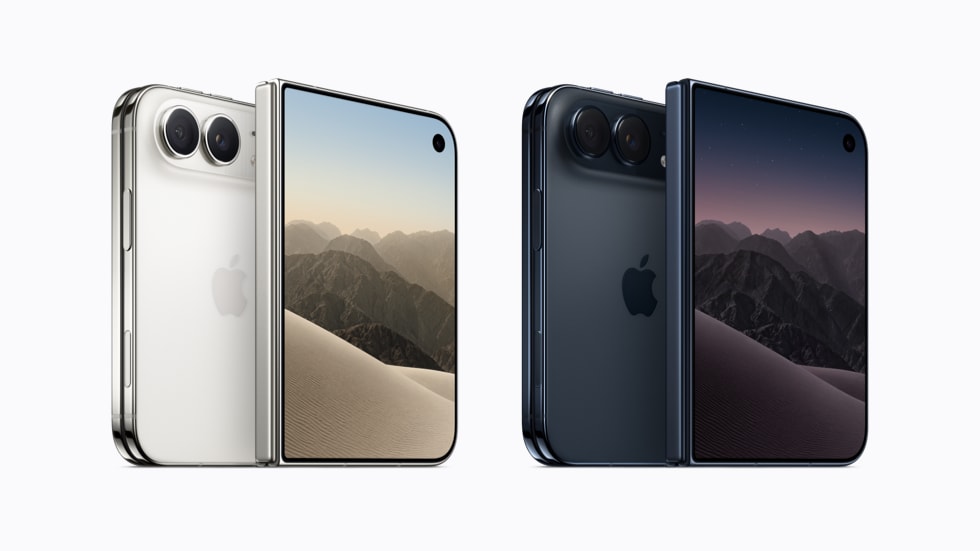
In one breath: a 7.6-inch folding inner display (the largest screen ever on an iPhone), a 5.4-inch outer display that keeps it pocket-sized, A20 Pro chip with a vapor chamber and dual-battery system, grade 5 titanium body, a precision hinge with over 100 components, no Face ID (it uses Touch ID on the side button), no telephoto camera, and two colours — star white and night sky. Pre-orders open October 16, it lands in stores October 23.
If you only remember one thing: this is the biggest design change to the iPhone since the original, and also the most expensive iPhone Apple has ever sold.
The design — what folding actually means here
Open it up and the iPhone Duo gives you a 7.6-inch inner display — that is 50% larger than the screen on the iPhone 18 Pro Max. It is, Apple says, the thinnest iPhone ever when opened. Closed, the outer 5.4-inch display gives you about 90% of the screen area of an iPhone 18 Pro in a body roughly the size of a passport. It actually fits in your pocket.
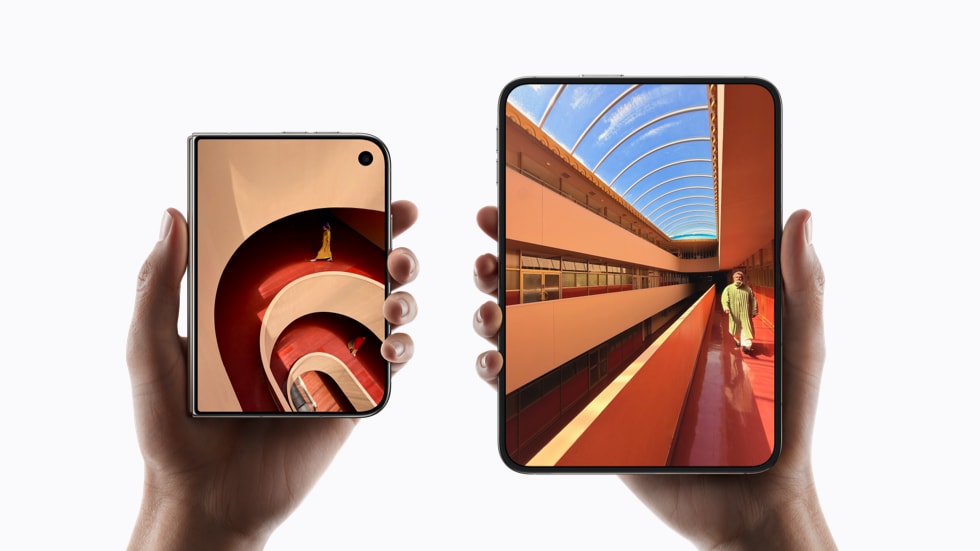
Both screens share the same aspect ratio, so when you open the phone, whatever you were doing scales up proportionally — it does not jump or reformat. The inner screen has a nano-texture matte finish that cuts glare and, importantly, hides the crease. Apple clearly studied every complaint people had about Samsung's folds and engineered around them.
A hidden FaceTime camera sits behind the inner display, invisible until you need it, so the big screen stays uninterrupted. The screens also feature ProMotion, Always On, and a blinding 3,000 nits of peak outdoor brightness — bright enough to read in direct Lagos sunlight. Later this year, it will support the Apple Pencil (USB-C) on either display, for the note-takers and sketchers.
Durability — the "will it survive Lagos?" question
This is the part every Nigerian asks first, because we all remember the early foldables that broke if you looked at them wrong. Apple went hard on durability. The body is grade 5 titanium with a mirror-polished finish. The back is Ceramic Shield, and the front uses a new Ceramic Shield 2 that is 3x more scratch-resistant than before. It carries an IP68 rating, so splashes, dust, and a drop in the rain will not kill it.
The hinge is the real engineering flex. It is built from over 100 components, holds the screen flat when open, and uses an integrated magnet array to close securely. Inside, support ribs and carbon-fibre plates reinforce the structure so it does not get floppy over time. The folding display itself uses a custom polymer cover that is up to 40% stiffer than what others use, with high-strength glass and special adhesives that let the layers glide like the pages of a book to relieve bending stress.
Plain English: Apple designed this hinge to survive years of opening and closing. Whether it survives two years of Lagos heat, harmattan dust, and being passed around at the office — that is what the first long-term reviews will tell us. But on paper, it is the most over-engineered hinge in a phone yet.
Performance & battery — built for heavy users
Under the hood is the A20 Pro, the same chip powering the iPhone 18 Pro line. But the Duo has a thermal advantage: a custom-designed vapor chamber and a dual-battery architecture. Translation: it pushes pro-level performance and stays cool while doing it, with all-day battery life.
This is where folding actually earns its keep. On a normal phone, Call of Duty: Mobile, PUBG, or a heavy game like Zenless Zone Zero (which Apple showed off) is fine but cramped. On the Duo's 7.6-inch unfolded screen, it becomes a proper handheld console. The same goes for editing 4K video in CapCut, splitting two apps side-by-side, or reading a full document without scrolling every five seconds. If your phone is genuinely your office and your entertainment, the extra screen is not a gimmick — it is the whole point.
The camera — what's there, and what's missing
The Duo has a 48MP Fusion Main camera with zero shutter lag and a dual 48MP setup. Folding also unlocks creative tricks you cannot do on a flat phone — like setting the phone half-folded on a table for hands-free group shots, or using the outer screen as a preview so your subject can see themselves before you snap.
But here is the honest part your buyer's-advisor voice needs to hear: there is no telephoto lens. No optical zoom. If zooming into the board from the back row or shooting distant subjects is important to you, the Duo is a step back from the iPhone 18 Pro's camera system. Apple clearly traded the zoom lens for thinness and the folding form factor. It is a real trade-off, not a hidden one.
Touch ID, not Face ID — the tradeoff you will feel every day
This surprised a lot of people. The iPhone Duo does not have Face ID. Authentication is Touch ID built into the side button, and you can also unlock with your Apple Watch.
Why? Because a folding screen with a hidden camera is a nightmare for the Face ID sensors that need dedicated hardware. Apple chose reliability over the face unlock we have all gotten used to since 2017. For most Nigerians this is honestly fine — Touch ID is fast, works in the dark, works with a mask, and works whether the phone is open or closed. But if you have fallen in love with Face ID, you will need to adjust.
Software — iOS 27 reimagined for folding
iOS 27 has been reworked for the Duo. You can run two apps side by side on the inner screen, there are new half-folded experiences (the phone sits like a laptop on a table), and it can act as a standalone StandBy display without needing to be plugged into a charger. Apple Intelligence 2 and Siri AI are on board, and a new Siri Camera mode lets Siri literally see what your camera sees to answer questions and take action — point it at a plant, a sign, a product, and ask.
For the multitasking Nigerian professional — the one splitting WhatsApp, email, a spreadsheet, and a browser at the same time — this is where the Duo stops being a toy and starts being a legitimate productivity tool.
Colours — keep it simple
Just two finishes: star white and night sky, both in mirror-polished grade 5 titanium. No burgundy flex this time — Apple kept the palette restrained for the first generation. Star white will be the head-turner; night sky is the safe, classy choice that hides fingerprints.
Launch date & availability
Pre-orders: Friday, October 16. In stores globally: Friday, October 23. Apple is launching in over 70 countries.
Nigeria is not on the day-one list, so the realistic timeline: sealed units should land with trusted importers and your reliable plug within roughly 2–3 weeks of the global release — at a premium. Foldables are fragile, expensive, and harder to ship safely, so expect the early-adopter tax to be even steeper than the iPhone 18 Pro's. Patience will save you real money here.
Price — dollars first, then the Naira that actually matters
Apple's official US pricing:
256GB: $1,999 512GB: $2,199 1TB: $2,599 2TB: $3,199
Yes, you read that right — the top tier is over three thousand dollars.
Now the Naira, at roughly ₦1,600 to the dollar:
256GB: about ₦3,198,000 512GB: about ₦3,518,000 1TB: about ₦4,158,000 2TB: about ₦5,118,000
A few honest warnings before you start budgeting:
These are estimates, not your final price. Lagos landed pricing on a foldable includes shipping (it ships boxed and careful), customs, and a healthy plug margin — expect a sealed unit to land 20–30% above the raw dollar conversion. The 256GB model could realistically touch ₦3.8–4.2 million in the first weeks.
The exchange rate is a moving target. These figures can shift by hundreds of thousands within weeks. Always confirm the live rate and the final landed price before you transfer a kobo.
Early units carry a foldable premium. Foldables are scarce and risky to import. The first month will be the most expensive month. Wait, and the price falls.
Buy from a trusted source only. A foldable with a damaged hinge or a creased screen is nearly worthless second-hand. Buy new and sealed, or not at all.
Should you buy it?
For the flex chasers and early adopters: Yes. The iPhone Duo is the most attention-grabbing phone in any room in 2026, full stop. If the flex is the point, this is the phone.
For power users and multitaskers: Yes, if you actually use two apps at once, edit on the go, or game seriously. The 7.6-inch screen earns its keep when you work it.
For everyone else: No, not yet. At this price you can buy an iPhone 18 Pro Max and a MacBook, or a UK-used iPhone 17 Pro and a good laptop and still have change. The Duo is a first-generation product — the version that comes in two or three years will be thinner, cheaper, and more refined. The smart money waits.
For photographers who rely on zoom: Skip it. No telephoto is a real limitation.
The verdict
The iPhone Duo is genuinely impressive engineering — the thinnest iPhone ever when opened, the largest iPhone screen ever, a hinge built like a Swiss watch, and software that finally takes folding seriously. Apple did not just make a foldable; they made the case for why folding matters.
But it is also $1,999, it has no Face ID, no telephoto camera, and it is a first-generation product in a category where second generations are always dramatically better. The honest Nigerian advice: admire it, read the early reviews, and unless the flex is non-negotiable or you genuinely multitask that heavily, let the early adopters pay the tax first. The Duo for you might be the Duo in two years — thinner, cheaper, and proven.
Whenever you are ready, new or UK-used, APPLL_PLUG has you covered — tested devices, honest grading, and a real warranty. That is how you buy smart in Nigeria.
Ready to find your next device?
Browse tested new and UK used phones and laptops from APPLL_PLUG — delivered across Nigeria.